I recently delved into the ‘unveiling’ of pseudonymous author Elena Ferrante and the impact the revelation had on reviewers and readers alike. Perhaps not surprisingly it’s got me thinking about pseudonyms on social media but more on that coming soon.
Claudio Gatti’s proclamation in 2016 that pseudonymous author Elena Ferrante was, in fact, Anita Raja, made public what was considered an open secret amongst the Italian literati. Despite this, the outing of Ferrante divided reviewers and readers, and generated much discussion around whether the revelation would – or should – impact on the reception of Ferrante’s work.

Publishing under a pen name is not new; think Mary Shelley, the Brontë sisters or Mary Ann Evans1. While female writers of earlier times often chose a pseudonym to ensure their work would be taken as seriously as a man’s (Hirst 2020:19), these days the decision is more often linked to the perceived ‘freedom’ of publishing in a different genre without any expectation (Osley 2013).
Ferrante’s reasoning, made explicit in an early letter to her publishers, recalls Barthes’ concept of the Death of the Author (Moore in press) – ‘books, once they are written, have no need of their authors’ (Ferrante 2016:19).
As Ferrante’s commercial success grew, however, her anonymity became part of the story, and following the international success of her ‘Neapolitan Novels’, efforts to identify the person behind the name intensified. Investigations ranged from quantitative linguistic approaches, such as that undertaken by Tuzzi and Cortelazzo (2018), to the exploits of Gatti who scoured through financial records and real estate purchases to track down his ‘suspect’ (Mullenneaux p78).
The readers’ perspective
In considering whether the use of a pseudonym has affected the way Ferrante has been received by her readers, we could simply argue that her book sales speak for themselves. We could also argue, as the Sunday Times (2017:28) did, that ‘what matters to the readers is whether there will be any more books’.

However, neither position speaks to the complex relationship that develops between author and reader.
Ferrante has been using her pseudonym since her first novel was published in 1992, enabling her readers to build something of a ‘relationship’ with her. Consequently, an unspoken pact has developed between them and Ferrante with regards to her identity – they won’t ask and she won’t tell. Indeed, O’Rourke (2014:para.27) proposes that Ferrante’s ‘biographical absence’ allows a focus on her books and her ‘literary continuity’ that might not otherwise happen. While this may be the case for Ferrante’s readership, reviewers tend to take a different approach.
The reviewers’ perspective
In discussing Ferrante’s reception by reviewers2, it is interesting to consider how she is viewed outside of Italy compared to within Italy. Outside (particularly in the US), she has been praised for her feminist literature (Falkhoff para.11; Segnini 2017:108), while within Italy, the majority of (mostly male) reviewers have neglected to consider her books within any literary context, relegating her earlier works to supposed ‘low status genres’ (Schwartz 2020:125).
Within this same cohort, there have also been questions raised about whether a ‘non-existent author’ should be eligible for awards (Scwhartz 2020:136). The basis for this reaction could be that for those reviewers, the author’s backstory is considered such a critical element in understanding a body of work that when this is not available the work is considered, perhaps subconsciously, less important or less authentic.
However, given that Ferrante’s opacity as an author is applauded by others for the ‘space’ it provides the reader, one can’t help but think that maybe some, like Gatti, simply don’t like not knowing.
‘That’s the beauty of the writer’s anonymity: it helps us find what we want to’
D Orr, 2015:29
This may be especially so if, as Pinto et al. (2020:237) observe, the author appears hypocritical: ‘… [Ferrante] retracts her real, biographical self, thereby questioning the commercial mechanisms of authorial presence while at the same time benefitting from that mechanism’.
Suspicion that Ferrante’s motive for concealing her identity is more ‘marketing strategy’, less ‘protest against the culture of literary celebrity’ (Segnini 2017:115), is not new. The 2016 publication of Frantumaglia: a writer’s journey was seen by some as proof of their conviction, with Ferrante accused of flouting her assertion that writing should have ‘an autonomous space, far from the demands of the media and the marketplace’ (O’Connell 2016:para 10). Conversely, those supportive of Ferrante’s right to privacy, have noted the book’s value in articulating Ferrante’s views and ‘deepest preoccupations’ (Erens 2020:135).
Speculation as to whether Ferrante is a man or a woman also persists, fuelling conversations around female writers and feminist writing, such as that by Lucamente (2018). Furthermore, conjecture that Ferrante is a man, writing alone or as part of a collective, has ignited debate around the idea that any good writer must be a man (Donadio 2018:98). This raises the question of whether a reader’s response to a work should ‘depend on [the] perception of the author’s gender, and if so, how?’ (Donadio 2018:107).
The overwhelming response to this seems to be that yes, author gender does matter. Consider Falkoff’s statement (para.16) that she would feel ‘exploited’ if Ferrante’s works were not derived from the authentic inner workings of a woman’s mind but were rather coming from a man who knows which (literary) buttons to push. Her comments capture what seems to be a widely held sentiment around the (dis)comfort of Ferrante not being a sole, female writer.
Another discussion that has surfaced since Ferrante was outed is the issue of cultural appropriation, with debate sharply focused on irregularities between Ferrante’s life, as she had divulged it, and that of the presumed author (Segnini 2017:111). As Rosenberg (2016:para.7) acknowledges, ‘… debates about cultural appropriation do seem to imply that authors have to come prepared to defend their bona fides’.
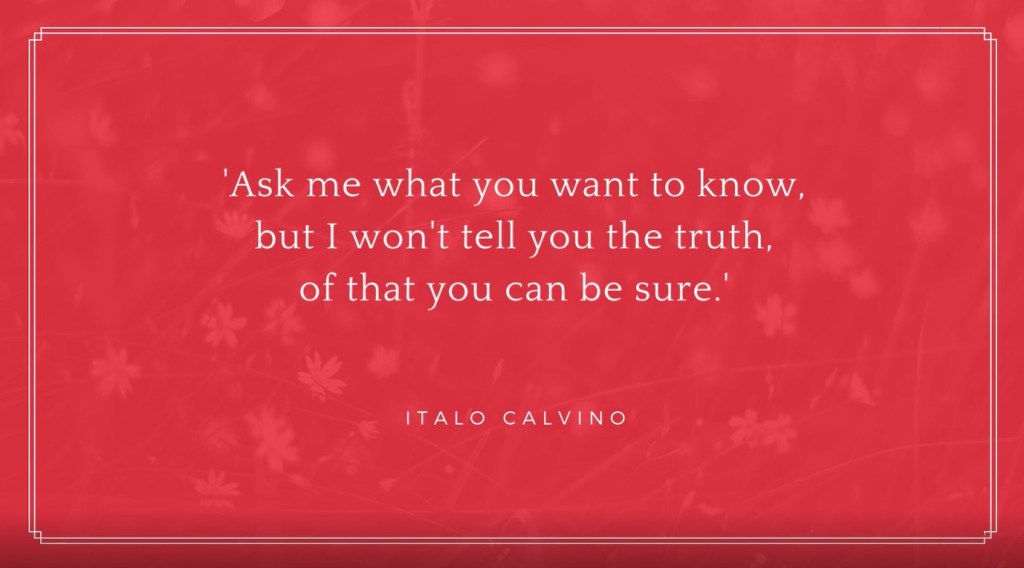
The absence of a validated biography for Ferrante, together with her fondness for a quote by Italo Calvino (see Ferrante 2016:162), makes this question of appropriation difficult to address.
While it would be an overstep to suggest that most readers of Ferrante would defend her right to anonymity while most reviewers would applaud her unveiling, there does seem to be a divide between the two groups, stemming from an expectation about the responsibility, or indeed obligation, of an author.
Although Ferrante has agreed to numerous written interviews during her career and, at one time, penned a regular column for The Guardian, she has never responded to questions on her identity. This is consistent with her conviction that books shouldn’t need their authors, however, the debates that her silence have provoked – on issues such as ‘the nature of authorship, … the fluidity of personal identity, … the intermingling of life and art, [and] assumptions regarding gender and literary authority’ (Donadio 2018:99) – do raise the question as to whether there is a bigger intent here on the part of Ferrante. Is it these discussions, rather than protection of identity, that Ferrante, singularly or collectively, was hoping for?
[1] Mary Ann Evans, author of Mill on the Floss and Middlemarch, wrote under the pen name George Eliot.
[2] For the purposes of this paper, reviewers and academics have been brought together under the banner of ‘reviewers’. This reflects their shared ‘removed’ perspective in assessing literary works (as distinct from a reader’s perspective).
References
Donadio R (2018) ‘My Search for Elena Ferrante’, Atlantic, December 96-107.
Erens P (2020) ‘Frantumaglia: Elena Ferrante’s blurred lines’, Virginia Quarterly Review Winter:132-139.
Ferrante E (2016) Frantumaglia: A writer’s journey (Goldstein A trans), Libby edn, Text Publishing, Melbourne.
Hirst S (2020) ‘What’s in a name?’, History Today, 70:19-22.
Lucamente S (2018) ‘Undoing feminism: The Neapolitan novels of Elena Ferrante’, Italica, 96(1): 31-49.
O’Connell A (22 October 2016) ‘I am not the face of Elena Ferrante’, The Times, London, accessed 29 August 2021.
Orr D (2 October 2015) ‘We don’t know Elena Ferrante—and that’s exactly why her success is so wonderful’, The Guardian, accessed 30 August 2021.
Pinto I, Milkova S and Cavarero A (2020) ‘Storytelling philosophy and self writing—Preliminary Notes on Elena Ferrante: An interview with Adriana Cavarero’, Narrative, 28(2):236-249.
Rosenberg A (4 October 2016) ‘Elena Ferrante and the tensions between authenticity and privacy’, Washington Post, accessed 2 September 2021.
Schwartz C (2020) ‘Ferrante feud: The Italian reception of the Neapolitan Novels before and after their international success’, The Italianist, 40(1):122-142.
Segnini E (2017) ‘Local flavour vs global readerships: The Elena Ferrante project and translatability’, The Italianist, 37(1):100-118.
Sunday Times (2 April 2017) ‘Step forward, Elena Ferrante’, Sunday Times, accessed 29 August 2021.
Tuzzi A and Cortelazzo MA (2018) ‘What is Elena Ferrante? A comparative analysis of a secretive bestselling Italian writer’, Digital Scholarship it the Humanities, 33(3):685-702.
 thekettlehasemphysema.net